
6 Signs of Good Health That Have Nothing to Do With Weight

By Rebekah Mayer, Exercise & Movement Specialist | Lead Assessment Technician
UPDATED: Wednesday, April 8, 2026
The Scale Is One Data Point. Here Are Six More.
Weight gets most of the attention in health conversations. It’s easy to understand why. It’s a number that’s simple to measure and impossible to ignore. But weight alone can’t tell you whether your nervous system is regulated, your gut is functioning well, your hormones are balanced, or your body is actually recovering from the demands you’re placing on it.
Health is a puzzle. Weight is one piece. Here are six others worth paying attention to:
1. Your Energy Is Consistent Throughout the Day
Energy isn’t just about feeling good. It’s a reliable signal of how well your blood sugar, thyroid, hydration, and sleep are working together. Stable energy across the day, without crashing mid-afternoon or relying heavily on caffeine to get started, suggests those systems are largely in balance.
If your energy is unpredictable, a few places to look first: hydration (aim for roughly half your body weight in ounces of water daily), how you’re pairing your meals (combining carbohydrates with protein or fat blunts blood sugar swings and the fatigue that follows), and sleep quality. These three are often interconnected. Addressing one frequently improves the others.
If those adjustments don’t move the needle, lab data can tell you more. Blood sugar regulation, thyroid function, and vitamin D levels are all worth assessing. Vitamin D in particular is frequently overlooked as a contributor to both energy and mood.
2. You’re Getting 7–8 Hours of Uninterrupted Sleep
Sleep is where repair happens. For your organs, your hormones, your immune system, and your brain. It also has a measurable effect on cravings, inflammation, physical recovery, and mental health. It’s not optional infrastructure; it’s foundational.
Consistent sleep timing is one of the highest-leverage changes most people can make. Going to bed at the same time each night, even on weekends, supports the circadian rhythm that governs your sleep-wake cycle. Cutting caffeine by noon removes a common but underestimated disruptor. Eating a dinner with more complex carbohydrates (rice, potatoes, quinoa) can also support more restful sleep.
If those changes aren’t enough, a deeper dive into specific sleep disruptions may be required. Supplements can be one tool to support sleep, but should be considered in tandem with lifestyle support and diagnostics if needed. A sleep tracker that measures REM and deep sleep stages adds useful data. Total hours tell part of the story, but sleep architecture tells the rest.
3. Your Digestion Is Regular and Comfortable
Bowel habits are one of the more direct windows into gut health, and gut health connects to nearly everything else: nutrient absorption, immune function, inflammation, and even mood.
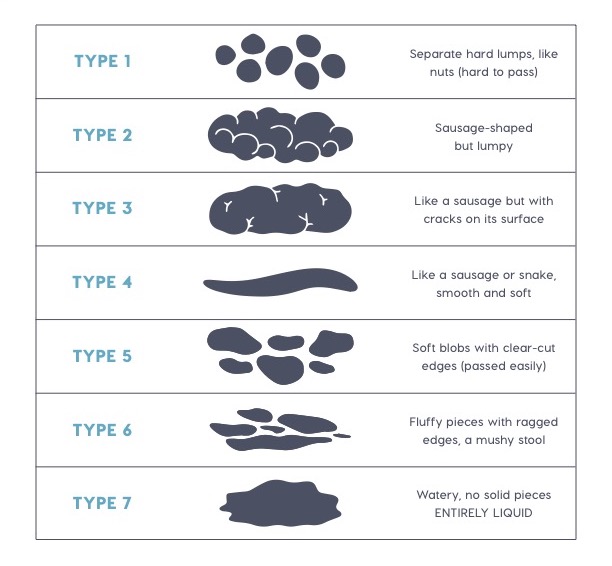
The chart above is a useful reference tool. Type 4, smooth, well-formed, and comfortable to pass, is the target. Types 1 and 2 indicate transit that’s too slow; Types 5 through 7 suggest the opposite. Diarrhea that occurs regularly can mean the body isn’t absorbing nutrients properly. Infrequent or difficult elimination can mean waste products are being reabsorbed rather than cleared.
Hydration and movement are the two most accessible levers here. Ten thousand steps daily supports gut motility in a way that’s easy to underestimate. Temporarily tracking food can reveal patterns that aren’t obvious otherwise: certain foods, combinations, or timing may be driving symptoms that seem random.
If basic adjustments don’t resolve the issue, more precise testing is available. At-home stool testing, food sensitivity panels, and SIBO testing can identify root causes that won’t show up on a standard panel, or on a colonoscopy, which evaluates structure but not the microbial environment within the gut.
4. Your Skin Is Calm and Clear
Skin conditions like acne, eczema, rosacea, and psoriasis are frequently treated at the surface. But persistent or recurring skin issues often reflect something happening internally, most commonly gut dysfunction or systemic inflammation.
The gut-skin axis is well-documented. When the gut barrier is compromised or the microbiome is disrupted, it can manifest in ways that show up on the skin. Reducing inflammatory foods (highly processed foods, refined sugar, fast food), staying hydrated, and treating underlying GI dysfunction are all approaches that address the skin from the inside out.
Supplements like L-glutamine, which supports gut lining integrity, and omega-3 fatty acids, which reduce systemic inflammation, are worth considering. A food journal, even a brief one, can surface connections between what you’re eating and what your skin is doing that are otherwise hard to see.
5. Your Seated-to-Standing Pulse Increases by 10–25 Beats
This one is underused and genuinely useful. The change in your heart rate when you move from sitting to standing is a simple, accessible measure of how your autonomic nervous system is functioning.
The target range is a 10–25 beat per minute increase. You can measure it with a heart rate monitor, pulse oximeter, or smartwatch: sit quietly for a few minutes, note your heart rate, then stand and watch the change.
If your result is below 10 bpm, prioritizing self-care practices like daily meditation, breathwork, or massage may help, along with adjusting exercise toward shorter, higher-intensity sessions rather than long sustained efforts.
If your result is above 25 bpm, introducing novel inputs tends to help: new flavors, cold exposure, unfamiliar movement patterns, or cognitive challenges that push outside familiar routines.
6. For Women: Your Menstrual Cycle Is Predictable and Manageable
A monthly cycle that arrives consistently and produces only mild symptoms is a meaningful signal of hormonal balance. It’s not a minor quality-of-life issue. It’s data.
Severe cramping, significant mood disruption, or symptoms that require pain medication to manage are worth investigating. An absent cycle during reproductive years can indicate significant hormonal imbalance, extreme stress, or inadequate nutrient intake.
Fiber intake matters here more than most people realize. Constipation allows estrogen to be reabsorbed rather than cleared, which can contribute to hormonal imbalance over time. Reducing highly processed foods helps stabilize blood sugar swings that drive mood instability. Magnesium in the days leading up to menstruation supports nerve and muscle relaxation and may meaningfully reduce cramping.
If symptoms are significantly disrupting daily life, lab testing including hormone panels can identify the specific imbalances driving them. Severe PMS and painful periods aren’t an inevitable part of cycling. They’re worth investigating.
The Full Picture
Weight is a data point. It’s not the whole story, and it never has been.
Energy stability, sleep quality, digestive health, skin clarity, autonomic regulation, and hormonal balance each tell you something the scale can’t. Taken together, they offer a much more complete and actionable picture of what’s actually happening in your body.
The goal isn’t to track everything at once. It’s to know which pieces of the puzzle you’re missing.